
American University of Beirut, University Archives and Special Collections
Country: Lebanon
Collection Type: LibraryUniversity
Collection Size: 10,000-50,000
Period: 1860-19001900-19301930-19601960-1980Later than 1980
Type of Material & Format: Black and White imagesColour imagesDigital filesFilm-based negativesGlass plates positives and/or negativesPrints
Website: http://www.aub.edu.lb/main/academics/libraries/Pages/index.aspx
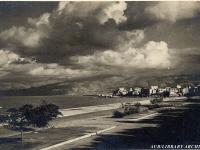
The University Archives and Special Collections (ASC) Department at the Libraries of the American University of Beirut (AUB) aims to collect, organize, preserve and provide access to the University’s archives, as well as to primary and unique historical resources that document the history and culture of AUB, Lebanon and the region at large. The Archives and Special Collections contain 700 linear feet of archival material (including papers of famous Lebanese and Arab intellectuals); 1,400 manuscripts; 9,000 volumes of AUB theses and dissertations; 5,000 posters; 1,900 maps; and 50,000 photographs. The collections are developed and enriched on an ongoing basis to support the academic and research programs of the AUB.
The AUB Archives and Special Collections’ photograph collections cover the late 19th to the 21st centuries and include many formats (negatives, glass plates, cabinet cards, albumen, black and white silver, colored, etc.). The collections include a number of significant holdings: the Moore Collection (106 black and white photos of AUB campus, Lebanon and the region taken between 1892 and 1915); the Blatchford Collection (801 photographs of the Middle East, Europe and North Africa between. 1880 to 1900); an Egyptian Theatre Collection (477 photos Black and white photographs in 20 albums that cover History of Egyptian Cinema from early to mid-twentieth century); the Richard Finnie Photo Collection (52 black and white photographs of Lebanese towns and cities during the 1950s); the Manoug Photo Collection (around 464 black and white photos of Lebanon covering the years 1940 to 1990); the Kanafani Photo Collection (228 black and white as well as colored photos covering crafts and folklore in the Middle East, 1982, 1998), in addition to an extensive photo collection documenting AUB’s various academic and extra-curricular activities since its founding in 1866.
Contact Details:
Name: Kaoukab Chebaro/Head; Samar Mikati/Archives Librarian
Email: ; mailto:[email protected]; [email protected]
Address: Ras Beirut, Bliss Street, Beirut Lebanon
Tel: +961 (0)1 350000; ext: 2610/ 2635
Annahar
Country: Lebanon
Collection Type: Press
Collection Size: > 50,000
Period: 1900-1930 1930-1960 1960-1980 Later than 1980
Type of Material & Format: Black and White images Colour images Digital files Film-based negatives Glass plates positives and/or negatives Prints
Website: http://archives.annahar.com.lb/
One of the largest press publications in the Arab world, Annahar was established in 1933 and its photograph collection, which really began in 1937, expanded as the journal grew. It initially focused on the political and economic life of Lebanon and the Arab world, as well as globally, and today covers all topics including international news, culture and sports.
Three million photos were acquired by donation from staff or contract photographers or by purchase from other news agencies, around half of which have been scanned, digitized and indexed by Annahar’s Information Center. The archive is still expanding and is made available and accessible to researchers, students and the public at large through the online Annahar Archives & Information System program (ANAIS). The photographic archive has been used for publications, including history books, and exhibitions in Lebanon.
Contact Details:
Nabila Bitar, Collection representative
[email protected]
http://archives.annahar.com.lb
www.annahar.com
+961-1-963-788
Arab Image Foundation
Country: Lebanon
Collection Type: Foundation or Association
Collection Size: > 50,000
Period: 1860-19001900-19301930-19601960-1980Later than 1980
Type of Material & Format: Black and White imagesColour imagesDigital filesFilm-based negativesGlass plates positives and/or negativesPrintsSlides (positives)
Website: http://www.fai.org.lb/home.aspx
Finding Aid: local database/ catalogue
The Arab Image Foundation (AIF) is a non-profit organization dedicated to the collection, preservation, and study of photography and other related visual material from the Middle East, North Africa, and the Arab Diaspora. Established in Beirut in 1997, it holds over 600,000 photographs from the mid-19th century to the present day.
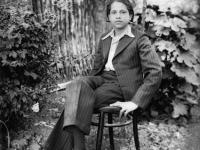
The collection includes various photographic mediums such as film-based negatives, glass-plates, and prints. It reflects both the general preservation mission of the foundation and the specific interests of its members, who have initiated research projects in Lebanon, Syria, Palestine, Jordan, Egypt, Morocco, Iraq, Iran, Mexico, Argentina and Senegal. Authored by professionals, amateurs and anonymous photographers, the images encompass a range of genres and styles – including studio portraiture, family albums, documentary, reportage, industrial photography, fashion photography, architecture, advertising, fine art, landscape and still life. The collection includes extensive collections entrusted by photographers such as Hashem el Madani (Lebanon), Van Leo (Egypt), Antranig Bakerdjian (Palestine), and Kamil and Rifaat Chadirji (Iraq) among others.
Images from the collection can be viewed online through the AIF website and through the in-house online image database. The AIF’s research facilities include over 1,300 books, monographs, catalogues, journals, theses and DVDs dedicated to the study of photography, preservation, art, theory, and regional history.
The AIF has produced fifteen exhibitions and eight publications in partnership with international museums, galleries and cultural institutions, and the collection has been used for artists’ projects, curatorial initiatives and academic research.
Contact Details:
Email: [email protected]
Address: Zoghbi Building, 4th floor, 337, Gouraud Street, Gemmayzeh, Beirut
Tel: +961 1 569 373
Arab Image Foundation
Country: Lebanon
Collection Type: Foundation or Association
Collection Size: > 50,000
Period: 1860-1900 1900-1930 1930-1960 1960-1980 Later than 1980
Type of Material & Format: Black and White images Colour images Digital files Film-based negatives Glass plates positives and/or negatives Prints Slides (positives)
Website: http://www.fai.org.lb/home.aspx
Finding Aid: local database/ catalogue
The Arab Image Foundation (AIF) is a non-profit organization dedicated to the collection, preservation, and study of photography and other related visual material from the Middle East, North Africa, and the Arab Diaspora. Established in Beirut in 1997, it holds over 600,000 photographs from the mid-19th century to the present day.
The collection includes various photographic mediums such as film-based negatives, glass-plates, and prints. It reflects both the general preservation mission of the foundation and the specific interests of its members, who have initiated research projects in Lebanon, Syria, Palestine, Jordan, Egypt, Morocco, Iraq, Iran, Mexico, Argentina and Senegal. Authored by professionals, amateurs and anonymous photographers, the images encompass a range of genres and styles – including studio portraiture, family albums, documentary, reportage, industrial photography, fashion photography, architecture, advertising, fine art, landscape and still life. The collection includes extensive collections entrusted by photographers such as Hashem el Madani (Lebanon), Van Leo (Egypt), Antranig Bakerdjian (Palestine), and Kamil and Rifaat Chadirji (Iraq) among others.
Images from the collection can be viewed online through the AIF website and through the in-house online image database. The AIF’s research facilities include over 1,300 books, monographs, catalogues, journals, theses and DVDs dedicated to the study of photography, preservation, art, theory, and regional history.
The AIF has produced fifteen exhibitions and eight publications in partnership with international museums, galleries and cultural institutions, and the collection has been used for artists’ projects, curatorial initiatives and academic research.
Contact Details:
Email: [email protected]
Address: Zoghbi Building, 4th floor, 337, Gouraud Street, Gemmayzeh, Beirut
Tel: +961 1 569 373
Baakleen National Library
Country: Lebanon
Collection Type: Library
Collection Size: 1,000-10,000
Period: Later than 1980
Type of Material & Format: Colour imagesDigital files
Website: http://www.baakleenlibrary.com
Upon the initiative of Member of Parliament, Walid Jumblatt in1987, the building was restored and furnished to assume the role of a public library, which was equipped with various volumes, reference books, and periodicals. Its goal is to meet the needs of scholars, as well as to stimulate and develop the cultural movement. The National Library also includes the Baakleen National Library Friends Association, which consists of individuals concerned with public affairs, supporting the library financially and morally.
The Baakleen National Library inherited black and white photographs from the Jumblatt family but only fewer than 200 remain at the library.
Contact Details:
Name: Hussein el Dahouk
Email: [email protected]
Address: Baakleen, Shouf, Lebanon
Tel: +961 5 304 050
Bibliothèque Orientale – Université Saint-Joseph
Country: Lebanon
Collection Type: Library University
Collection Size: > 50,000
Period: 1860-1900 1900-1930 1930-1960 1960-1980 Later than 1980
Type of Material & Format: Black and White images Colour images Film-based negatives Glass plates positives and/or negatives Slides (positives)
Website: http://www.bo.usj.edu.lb/
Founded in 1875, along with the university Université Saint-Joseph (USJ), the Bibliothèque Orientale is a cultural, scientific and patrimonial space for exploration and research in the field of Oriental studies. Since its creation, several collections were put together by Jesuit scholars of the Université Saint-Joseph. The institution’s mission is the preservation of the collection, internal (USJ) research, exhibitions, publications of the material and improving accessibility by cataloging and digitizing. Conservation and restoration workshops are conducted since 2000 in order to preserve these precious funds.
A photograph library of around 50,000 photographic documents groups several collections, including the Poidebard fund, a Jesuit father and pioneer in aerial archeology. The collection dates from late 19th century to the mid 20th century, with the majority of the material from the period between the two World Wars. Photographs were taken as working instruments by the Jesuit archeologists or for documenting of missions and special interests.
Since 2000, the photograph collection has been featured in many exhibitions and publications published by Presses de l’USJ, for instance Portraits photographiques d’Orient (by the Jesuits, Lévon Nordiguian and May Semaan Seigneurie). It is available to the public by appointment.
Contact Details:
Name: Levon Nordiguian
Email: [email protected]
Address: Saint-Joseph University, Damascus Road – BP 17-5208 Mar Mikhaël
Beirut 1104-2020 – Lebanon
Tel: +961 (1) 421 000
Dar Al-Hayat information Center
Country: Lebanon
Collection Type: Press
Collection Size: > 50,000
Period: Later than 1980
Type of Material & Format: Black and White images Colour images Digital files Prints
Website: http://www.alhayat.com
Dar Al-Hayat Information Center has been created with the re-launch of the Lebanese newspaper Al-Hayat of 1946-1976 as a Pan Arab newspaper from London in October 1988. Based in Beirut, the center is currently a corporate unit that caters for Daralhayat publications (Alhayat international and its local editions, Laha Magazine and alWasat Magazine (ceased in 2004)).
The center’s photographs collection covers all Dar Al-Hayat publications interests and holds in its Beirut central archives over 270,000 photographs. All pictures have been archived either as born digital photos or as digital conversion from original prints and slides. A very limited photograph collection belongs to Alhayat of 1946, due to the fact that the old archives was destroyed by a fire in 1976 during the Lebanese civil war.
Database replication for internal access is made available in the 3 main geographical sites (London, Beirut and Riyadh).
Contact Details:
Name: Nada Itani
Email: [email protected]
Tel: +9611-987990 ext 405
Fax: +9611-983921
Institute for Palestine Studies
Country: Lebanon
Collection Type: Library Research center
Collection Size: 1,000-10,000
Period: 1900-1930 1930-1960 1960-1980 Later than 1980
Type of Material & Format: Film-based negatives Glass plates positives and/or negatives Slides (positives)
Website: http://www.palestine-studies.org
The Institute for Palestine Studies (IPS) is a private, independent, non-profit organization, established in Beirut in 1963. It is dedicated to documentation, research, analysis, and publication on Palestinian affairs, as well as the Arab-Israeli conflict.
The IPS began seriously collecting photographs in the early 1970s as a vital part of the cultural heritage and historical record of the Palestinian people. IPS is particularly proud to have amassed an archive in which photographs by Palestinians predominate.
Together, the various IPS collections total over 10,000 photos, many of them historical and unique, constituting a precious resource for those interested not only in the history of Palestine but also in the history of photography. The collections span the late 19th century to recent times, but by far the richest holdings are from the pre-1948 period. The subject matter ranges from Palestinian daily life (occupational, cultural, and leisure pursuits of all classes and population groups), through landscape and architecture, to military, public, and political activities and events. The some 400 photographs showcased in Walid Khalidi’s classic Before Their Diaspora: A Photographic History of the Palestinians, 1876-1948 (first published in 1984) were all selected from the various IPS collections. With regard to the post-1948 period, the photographs cover in particular life in refugee camps, the 1967 war, and periods of the Lebanese civil war, including the 1982 Israeli invasion. The collections came to IPS by donation or purchase.
The most important of the IPS collections is that of Khalil Raad, comprising some 3,000 photographs dating from the late 19th century to the eve of the 1948 war. Acquired from Khalil Raad’s family in 1978, it constitutes the photographer’s own personal archive and is the largest collection of his work in existence. The photographs portray all aspects of Palestinian life, urban and rural, from the Ottoman to the late Mandate period, as well as landscapes, towns, and villages, religious and archeological monuments, portraits of prominent personalities (especially political and religious figures), and religious and public event.
Another important collection is the Jawhariyah collection, containing seven albums of photographs (around 859 photographs) carefully selected over a period of decades by the Palestinian musician and memoirist, Wasif Jawhariyah, and seven corresponding notebooks describing the photos, covering the photographic history of Palestine during the late Ottoman and British mandate periods.
Other holdings include: the IPS Photo collection, comprising 469 photographs, mostly from 1900 to 1948, donated to IPS by various individuals, families, and institutions; the PLO collection, comprising 107 photographs from the PLO Information and Culture Department from the period 1920-1948; the Fifth of June Society collection with 185 photographs by Khalil Raad covering the period 1900-1945; the Imperial War Museum collection, which contains around 202 photographs, and covers the period of the British mandate in Palestine; the Eric Matson collection, which includes around 229 photographs of Palestine under the British mandate originating from Jerusalem’s American Colony hotel and purchased by IPS from the U.S. Library of Congress; the Husayni collection, which contains around 55 photographs given to IPS by Hajj Amin al-Husayni, Grand Mufti of Jerusalem, depicting the Mufti both in Palestine and during visits abroad; the UNRWA collection, comprising around 630 photographs given to IPS by UNRWA and showing the refugee camps in the early years, from the late 1940s into the 1950s; the Arif al-Arif collection, consisting of 412 photographs mainly relating to the 1967 war, including the Palestinian exodus it triggered and scenes of destruction; and the IPS photo archives, comprising some 3,500 photographs from various sources (e.g. the United Nations, PLO, news agencies) amassed by IPS over the years of pre-1948 Palestine, the June 1967 war (including military action, destruction, and Security Council meetings), and Israel’s attack on Jordan in 1968.
The collection is housed at the IPS Library in Beirut. It is catalogued and available on an internal electronic database, with plans to make the collection accessible on the website. The collection has been featured in journals including Majallat al-Dirasat al-Filastiniyah, Jerusalem quarterly and Journal of Palestine Studies, and in publications such as Family Papers: Social modern history studies of Palestine, and British Mandate Jerusalem in the Jawhariyah Memories.
Contact Details:
Beirut Office
Name: Jeannette Sarouphim / Mirna Kalash Itani
Email: [email protected] / [email protected]
Address: Anis Nsouli Street, Verdun P.O. Box 11-7164 Beirut 1107 2230 Lebanon
Tel: +961 1 868387 / 814175 / 804959
Ramallah Office
Name: Sally Abu Bakr
Email: [email protected]
Address: 19 Emile Habibi Street, 4th flr. Al-Masion, Ramallah P.O. Box Ramallah 487
Tel: +9702 or +9722 2989108